Trees That Pose Real Safety Risks
Tree Removal Services in Charlotte for dead, diseased, or hazardous trees threatening property
A dead oak leaning toward your roofline or a diseased pine dropping limbs into the driveway creates immediate risk to structures and people below. Better Rate Tree Service handles tree removal in Charlotte for residential and commercial properties where trees have become structurally unsound, diseased beyond recovery, or positioned where failure would cause significant damage. Removal involves more than cutting and hauling—it requires assessing lean direction, identifying weak unions, rigging sections safely to the ground, and protecting landscape features during the process.
The service addresses trees that cannot be salvaged through pruning or treatment, including those with root rot, extensive storm damage, severe pest infestation, or dangerous proximity to structures and power lines. Crane-assisted removal becomes necessary when trees stand near homes without clearance for conventional felling, when trunk diameter exceeds safe rigging limits, or when surrounding landscape makes piece-by-piece lowering the only option. Property protection during removal includes ground padding beneath drop zones, careful limb control during descent, and strategic cutting sequences that prevent barber chair splits or uncontrolled falls.
Schedule a property evaluation to identify specific risk factors and determine the safest removal approach.
What Happens During Complete Tree Removal
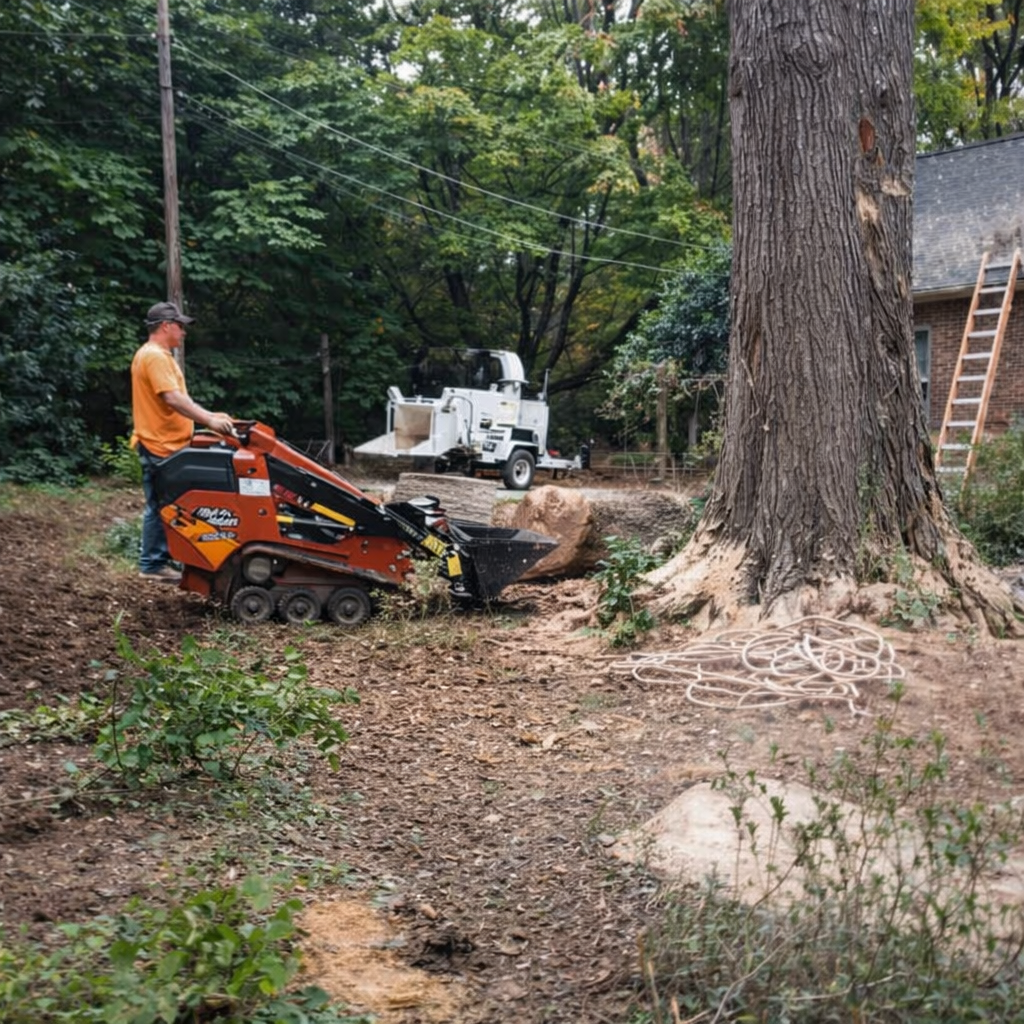
Removal begins with site assessment to identify obstacles, measure clearance distances, establish rigging anchor points, and determine whether the tree can be felled in one piece or requires sectional dismantling. For large trees or difficult-access removals, climbers ascend to remove upper sections first, rigging each piece with ropes and lowering devices to control descent speed and landing location. Crane-assisted operations use mechanical lifting to remove sections vertically when horizontal space is limited, eliminating the need for rigging lines and reducing time on site.
Once the tree is down, you'll notice immediate changes to sunlight patterns, sightlines across the property, and elimination of the hazard that prompted removal. The stump remains flush-cut at ground level unless grinding is requested separately, and all wood debris, branches, and foliage are removed from the site. Better Rate Tree Service completes debris cleanup and hauling as part of the removal process, leaving the area clear for lawn restoration or new planting.
The removal process includes pre-work inspection of surrounding structures to document existing conditions, which becomes important if insurance claims are involved later. For properties with multiple trees requiring removal, sequencing matters—removing trees in the correct order prevents adjacent trees from becoming unstable or inaccessible once others are down. Complete removal eliminates recurring maintenance costs, removes pest habitat, and stops root systems from damaging foundations, driveways, and underground utilities.
What Property Owners Usually Ask
Tree removal questions often focus on safety measures, site impact, and what remains after the work is finished.
What determines whether a tree needs crane-assisted removal?
Trees within ten feet of structures, those exceeding thirty inches in diameter, or removals where surrounding landscape cannot accommodate felling or rigging operations typically require crane support to lift sections vertically and place them in designated landing zones without ground impact.
How is property protected during large tree removals?
Ground protection includes plywood sheets or padding beneath drop zones, rope and pulley systems to control limb descent, and sectional cutting that keeps piece weight within safe rigging limits to prevent shock loading that could damage nearby features.
What happens to the wood and debris after removal?
Complete debris cleanup and hauling removes all branches, foliage, and trunk sections from the property—wood can be cut into firewood lengths and left on site if requested, but standard removal includes full material disposal.
When should dead or diseased trees be removed in Charlotte?
Removal should happen before storm season intensifies in late spring and summer, when high winds and heavy rain increase the likelihood of failure in trees with compromised structural integrity or root decay.
Does removal include stump grinding?
Removal leaves the stump cut flush with the ground, but grinding to below grade level requires separate stump grinding services to eliminate the remaining root crown and prepare the site for replanting or lawn restoration.
Better Rate Tree Service provides hazard assessment and removal planning for properties with trees showing structural failure signs, disease progression, or dangerous positioning. Request a detailed estimate based on tree size, access limitations, and site-specific removal requirements.