Structural Problems That Weaken Trees Over Time
Tree Pruning Services in Charlotte for deadwood, disease prevention, and structural defects threatening tree stability
Deadwood removal addresses branches that have died due to disease, pest damage, or insufficient light, which remain attached but no longer contribute to the tree's health and create falling hazards during wind or ice events. Structural pruning for young trees corrects growth patterns early by establishing a central leader, removing competing stems, and spacing lateral branches to create strong attachment angles that support long-term stability. Better Rate Tree Service performs tree pruning in Charlotte for residential and commercial properties where corrective cutting can prevent future failures, extend tree lifespan, and reduce maintenance costs over time.
The work involves selective removal of specific branches based on structural assessment rather than general size reduction, targeting defects like co-dominant stems with included bark, branches with acute attachment angles below thirty degrees, and limbs showing decay at union points. Disease prevention and tree health management includes removing infected tissue before pathogens spread, creating proper spacing that improves air circulation around foliage, and eliminating rubbing branches that create wounds where fungi and bacteria enter. Storm damage prevention pruning reduces the likelihood of failure by removing end-weight from long horizontal limbs and shortening branches that extend beyond the tree's natural drip line.
Schedule a property evaluation to identify structural weaknesses and prioritize corrective pruning.
What Proper Pruning Requires
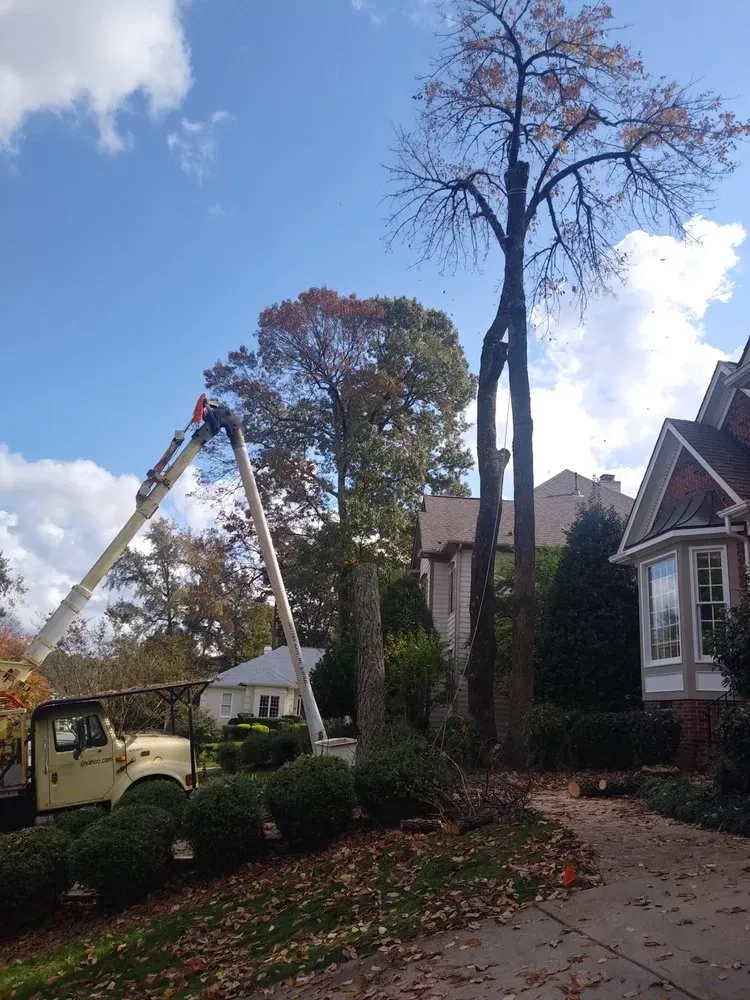
Pruning cuts must be made at specific locations to promote proper wound closure—branch collars contain specialized cells that compartmentalize damage and seal the cut surface, so cuts placed flush against the trunk remove this protective tissue and leave the tree vulnerable to decay. The three-cut method prevents bark stripping on large limbs by making an undercut first to break the connection, a top cut to remove the limb, and a final cut at the branch collar to finish cleanly. Safety-focused branch reduction shortens limbs that overhang structures or utility lines without removing them entirely, preserving the tree's canopy while eliminating specific hazards.
After pruning, you'll see a more open canopy structure with better spacing between major limbs, elimination of dead branches that previously created falling hazards, and removal of defects that would have led to splitting or breakage as the tree matured. Fruit tree pruning and maintenance follows different principles than ornamental pruning, focusing on maximizing sun exposure to fruiting wood and maintaining accessible heights for harvest rather than purely structural goals.
Pruning does not include wound dressings or sealants, which research has shown to interfere with natural closure processes rather than helping them. Young trees benefit most from structural pruning during their first five to ten years of growth, when corrective cuts remain small and trees respond quickly by redirecting energy to better-positioned branches. Mature trees require pruning primarily to remove deadwood, address storm damage, or eliminate hazards rather than to shape growth.
Common Questions About This Service
Property owners often ask about timing, cut placement, and how pruning differs from general trimming work.
How is pruning different from trimming?
Pruning targets specific structural problems, disease issues, or safety hazards by removing individual branches based on assessment of defects, while trimming focuses on controlling overall size and density through general canopy reduction.
What is deadwood and why does it need removal?
Deadwood consists of branches that have died but remain attached to the tree—they no longer bend in wind, making them prone to sudden breakage, and they provide no photosynthetic benefit while adding weight and creating falling hazards.
When should structural pruning be done on young trees?
Pruning works best during the dormant season for most species, though structural corrections on young trees can happen any time serious defects are identified, since small cuts cause minimal stress and close quickly regardless of season.
Does pruning help prevent disease spread?
Removing infected branches before pathogens move into the main trunk can stop disease progression in some cases, and improving airflow through the canopy reduces humidity levels that encourage fungal infections common in Charlotte's climate.
How much can be pruned without harming the tree?
Removing more than twenty-five percent of live crown material in a single session reduces the tree's ability to produce food and triggers stress responses—proper pruning removes only what's necessary to address specific problems while preserving as much healthy canopy as possible.
Better Rate Tree Service provides structural assessments to identify defects early and recommend corrective pruning before problems become severe. Arrange a consultation to review your trees for deadwood, weak unions, and disease signs that require attention.