Storm Damage That Requires Immediate Response
Emergency Tree Services in Charlotte for fallen trees, hazardous limbs, and urgent storm-related hazards
Severe thunderstorms and occasional tropical systems bring high winds, heavy rain, and lightning that cause sudden tree failures—trunks split vertically from lightning strikes, saturated soil releases root systems, and wind snaps branches that land on vehicles, rooflines, or block access routes. Emergency tree services address these urgent situations with 24/7 emergency response, arriving on site to assess hazards, stabilize dangerous conditions, and remove debris blocking driveways, roads, or structures. Better Rate Tree Service handles emergency tree work in Charlotte for residential and commercial properties where immediate action is needed to restore safety and prevent additional damage.
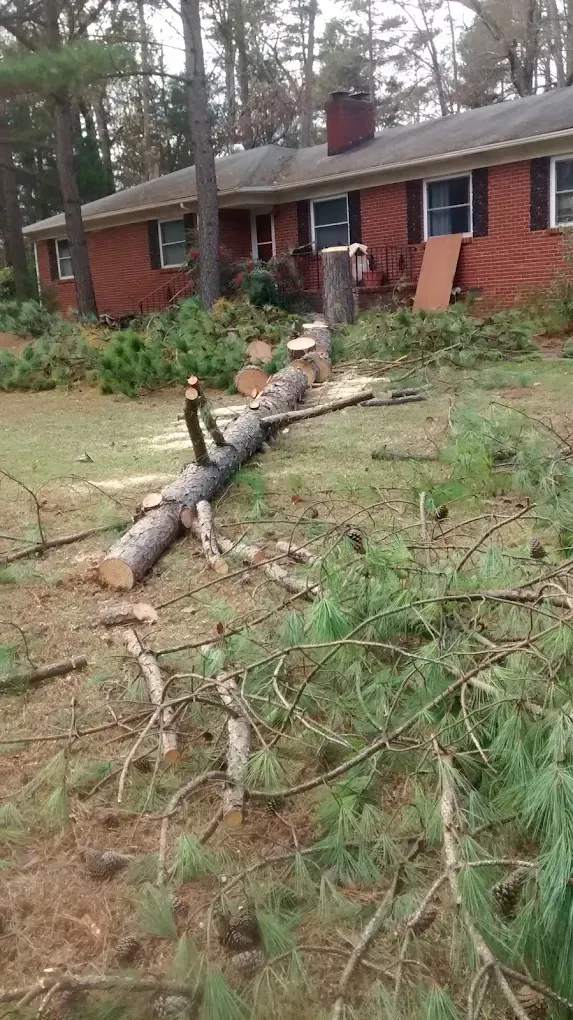
Storm-damaged tree removal focuses on trees that have partially failed but remain standing in unstable positions—split trunks held by bark strips, uprooted trees leaning against structures, and topped trees with jagged breaks that could release additional sections. Fallen tree cleanup clears debris from buildings, vehicles, and access areas, cutting trunks into movable sections and removing branches that obstruct entry or create ongoing hazards. Emergency limb removal addresses branches that hang precariously after partial failure, suspended in the canopy or caught against other trees where they could fall unpredictably.
Call for immediate hazard assessment when trees or limbs threaten structures or block critical access.
What Changes After Emergency Tree Cleanup
Emergency response begins with site safety evaluation to identify live electrical lines, structural instability, and secondary hazards like hanging branches or cracked trunks under tension. Work prioritizes removal of immediate threats first—trees on buildings get sectioned and lifted away to prevent further structural damage, blocked driveways and roads get cleared to restore access, and hanging limbs are rigged down before they fall unpredictably. Hazard assessment and mitigation includes identifying remaining trees with fresh damage that may fail soon and recommending follow-up work once the immediate crisis is resolved.
After emergency services, you'll notice restored access to buildings and roads, elimination of visible hazards that threatened additional damage, and cleared sight lines where fallen debris previously blocked visibility. Properties return to safe, usable conditions even if cleanup leaves stumps, root balls, or minor debris that requires follow-up removal during normal business operations. Insurance claim documentation assistance includes photographing damage before removal, noting tree species and size, and providing written descriptions of failure mechanisms to support claims for property damage.
Emergency work focuses on safety and access restoration rather than complete site cleanup—root balls may be left in place temporarily if removal requires heavy equipment not available during overnight response, and stump grinding happens as a separate follow-up service. The 24/7 availability means response happens regardless of time or weather conditions, though severe ongoing storms may require waiting until wind speeds drop below safe working thresholds.
Questions Before Emergency Service
During storm events, property owners need to know about response timing, safety protocols, and what emergency service includes.
What qualifies as a tree emergency?
Situations requiring immediate response include trees or large limbs on structures or vehicles, fallen trees blocking essential access routes, trees leaning against power lines, and hazardous hangers suspended in the canopy that could fall without warning.
How quickly can emergency crews respond in Charlotte?
Response time depends on call volume during widespread storm events—isolated incidents typically receive response within two to four hours, while major weather events create queues where life-safety situations get prioritized ahead of property damage without imminent risk.
Does emergency service include complete debris removal?
Emergency work focuses on eliminating immediate hazards and restoring access, which may leave some debris on site for follow-up removal during daylight hours when conditions allow more thorough cleanup and equipment access improves.
What documentation is provided for insurance claims?
Emergency crews photograph damage before and during removal, document tree size and species, note failure mechanisms like root plate failure or trunk splitting, and provide written summaries that insurance adjusters use to evaluate claims.
Can emergency crews work around power lines?
Trees on or near power lines require utility company response first to disconnect service and remove electrical hazards—tree crews cannot safely work near energized lines and must wait for clearance before beginning removal.
Better Rate Tree Service maintains 24/7 emergency response capability for storm-damaged trees and urgent hazard situations. Contact our emergency line immediately when trees or limbs create safety risks requiring rapid response.