
Stumps That Create Hazards and Limit Use
Stump Grinding Services in Charlotte for removal of visible stumps after tree extraction
Tree stumps left at ground level create tripping hazards in walkways and lawn areas, damage mower decks when hidden by grass growth, and prevent replanting or landscaping in the same location. Stump grinding eliminates these obstacles by mechanically reducing the stump and major surface roots to wood chips below grade level, typically six to twelve inches beneath the soil surface depending on equipment size and intended future use. Better Rate Tree Service provides stump grinding in Charlotte for residential and commercial properties where stumps remain after tree removal, whether from recent work or from trees removed years earlier that were never fully addressed.
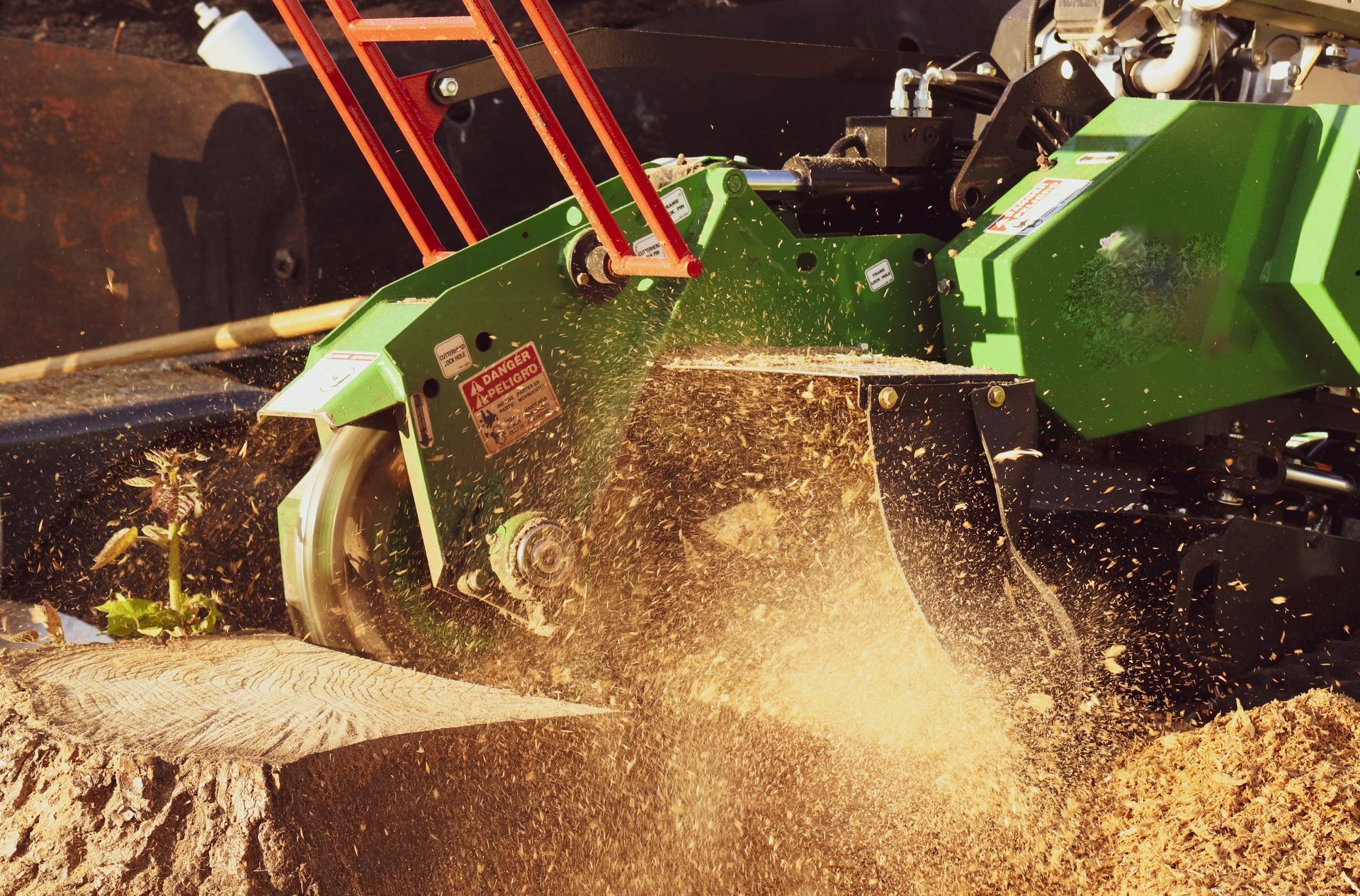
The process uses rotating cutting wheels with carbide teeth that chip away wood in passes, working from the outer edge toward the center and gradually lowering the cutting depth until the stump sits below the surrounding grade. Grinding below grade level ensures the remaining wood won't interfere with lawn maintenance, allows soil and sod to cover the area completely, and creates space for root systems of replacement plantings. Fast and efficient equipment sizes range from small units that fit through garden gates for backyard access to large track-mounted grinders that process stumps exceeding four feet in diameter.
Request a detailed estimate based on stump diameter, root spread, and site access requirements.
What Stump Removal Actually Accomplishes
Grinding converts the visible stump and shallow lateral roots into mulch-like chips that fill the resulting depression, though the material settles over time as decomposition progresses and soil microbes break down the wood. Elimination of tripping hazards removes raised obstacles from lawn areas where people walk, children play, and lawn equipment operates—stumps hidden by tall grass cause frequent ankle injuries and create hard impacts when struck by mower blades. Preparation for new landscaping opens the space for planting replacement trees, installing garden beds, or extending lawn coverage without interference from remaining wood.
After grinding, you'll see a depression filled with wood chips where the stump previously sat, level access across areas that were blocked, and elimination of the visual remnant that marked where the tree once stood. The grinding process generates substantial chip volume—a twenty-four inch stump produces enough chips to fill multiple wheelbarrows, which can be left on site as mulch, spread elsewhere in the landscape, or hauled away as part of complete site cleanup. Some property owners leave chips in place and cover them with topsoil and sod, while others prefer complete chip removal and immediate soil replacement.
Grinding does not remove deep tap roots or lateral roots beyond approximately twelve inches from the stump perimeter—these remain underground and decompose naturally over several years without affecting surface use. The depression left after grinding typically settles further over the following year as chips decompose and soil fills voids, requiring occasional topdressing to maintain grade level. Properties with multiple stumps see cost efficiencies when grinding happens in a single visit rather than scheduling separate trips for each stump.
What Property Owners Usually Ask
Stump grinding questions focus on depth, chip disposal, timing considerations, and how the process affects surrounding landscape.
How deep are stumps ground below the surface?
Standard grinding reaches six to twelve inches below grade, which accommodates lawn restoration and most replanting needs—deeper grinding is possible for specific construction or planting requirements but requires additional time and larger equipment.
What happens to the wood chips produced during grinding?
Complete site cleanup includes hauling chips away and leaving the depression empty for soil filling, though many property owners choose to leave chips on site as free mulch for garden beds or mixed with soil to fill the stump depression.
Can new trees be planted where stumps are removed?
Grinding creates space for replanting once chips are removed and fresh soil is added, though planting directly into wood chips without soil amendment limits root establishment because chips decompose slowly and tie up nitrogen during breakdown.
Does grinding damage nearby landscape features?
Professional grinding maintains clearance from structures, irrigation lines, and decorative landscape elements, though surface roots extending under turf may create minor ground disturbance as the grinder tracks over them to reach the stump.
When should stumps be ground after tree removal in Charlotte?
Grinding can happen immediately after removal or years later—fresh stumps grind more easily because wood retains moisture and cuts cleanly, while aged stumps become harder as they dry but grind just as completely with sharp cutting teeth.
Better Rate Tree Service offers stump grinding for individual stumps or multiple removals across your property, with options for chip removal or on-site spreading. Schedule an evaluation to review stump locations and determine grinding depth requirements for your intended landscape use.